


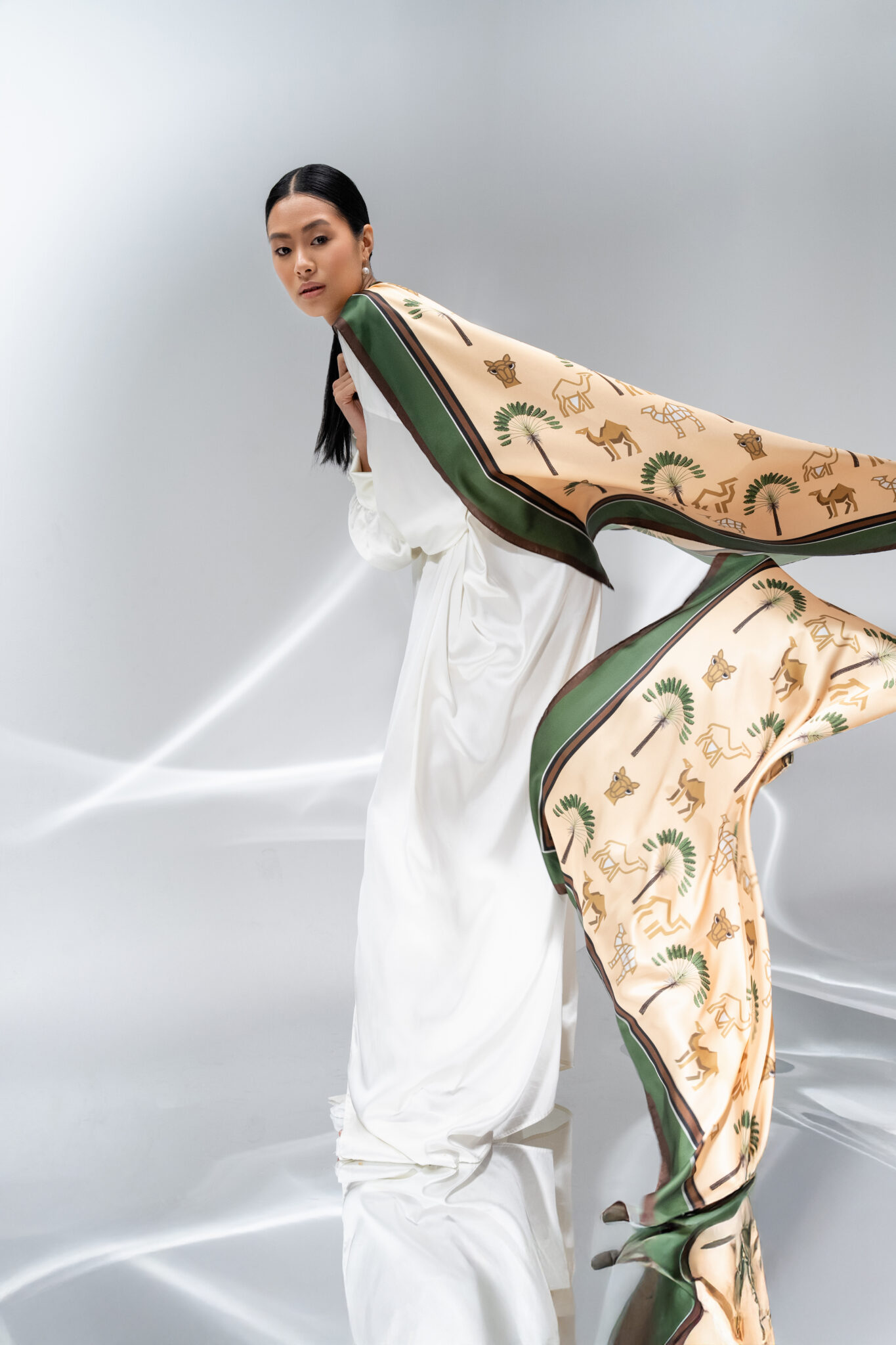
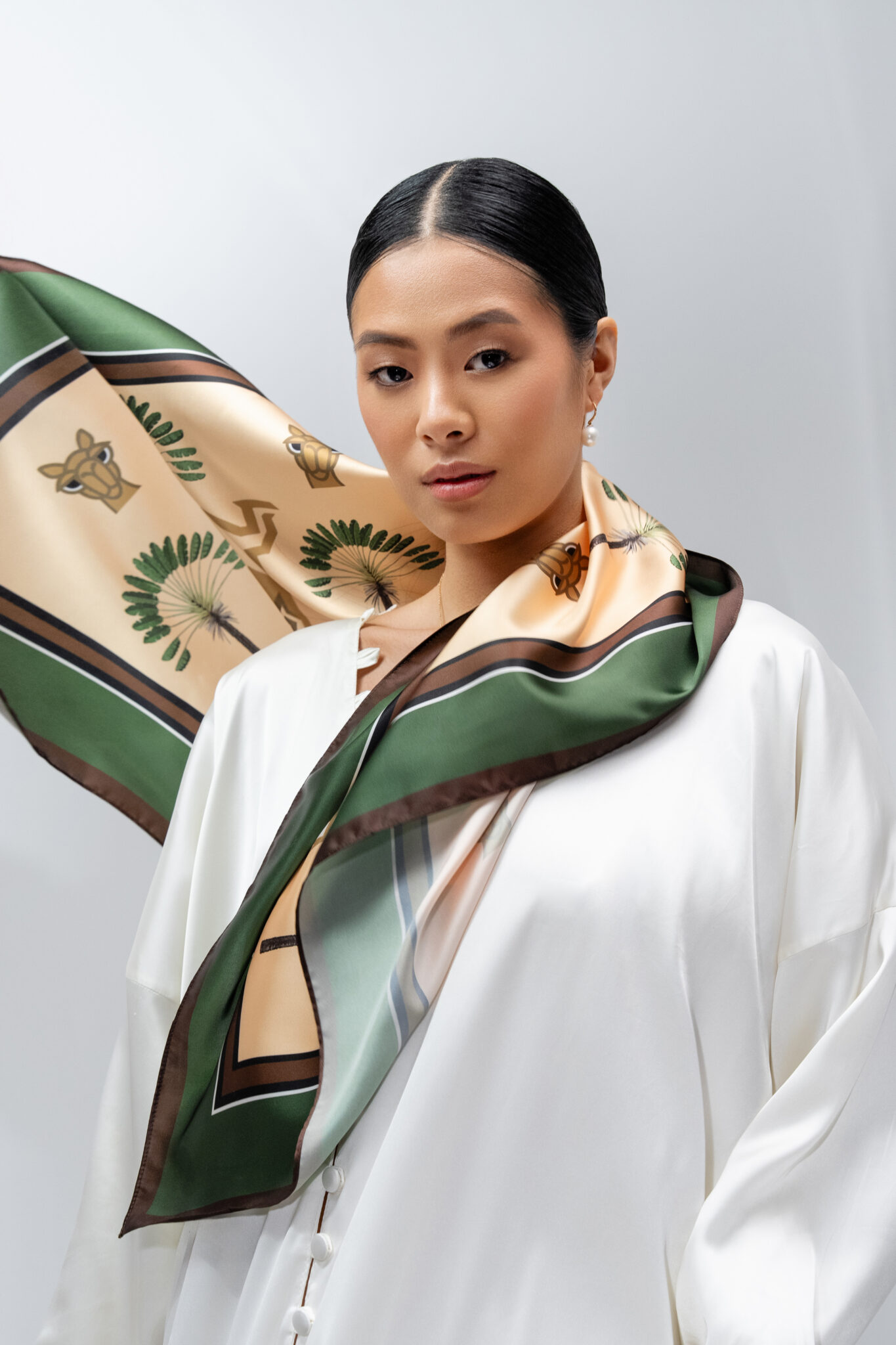
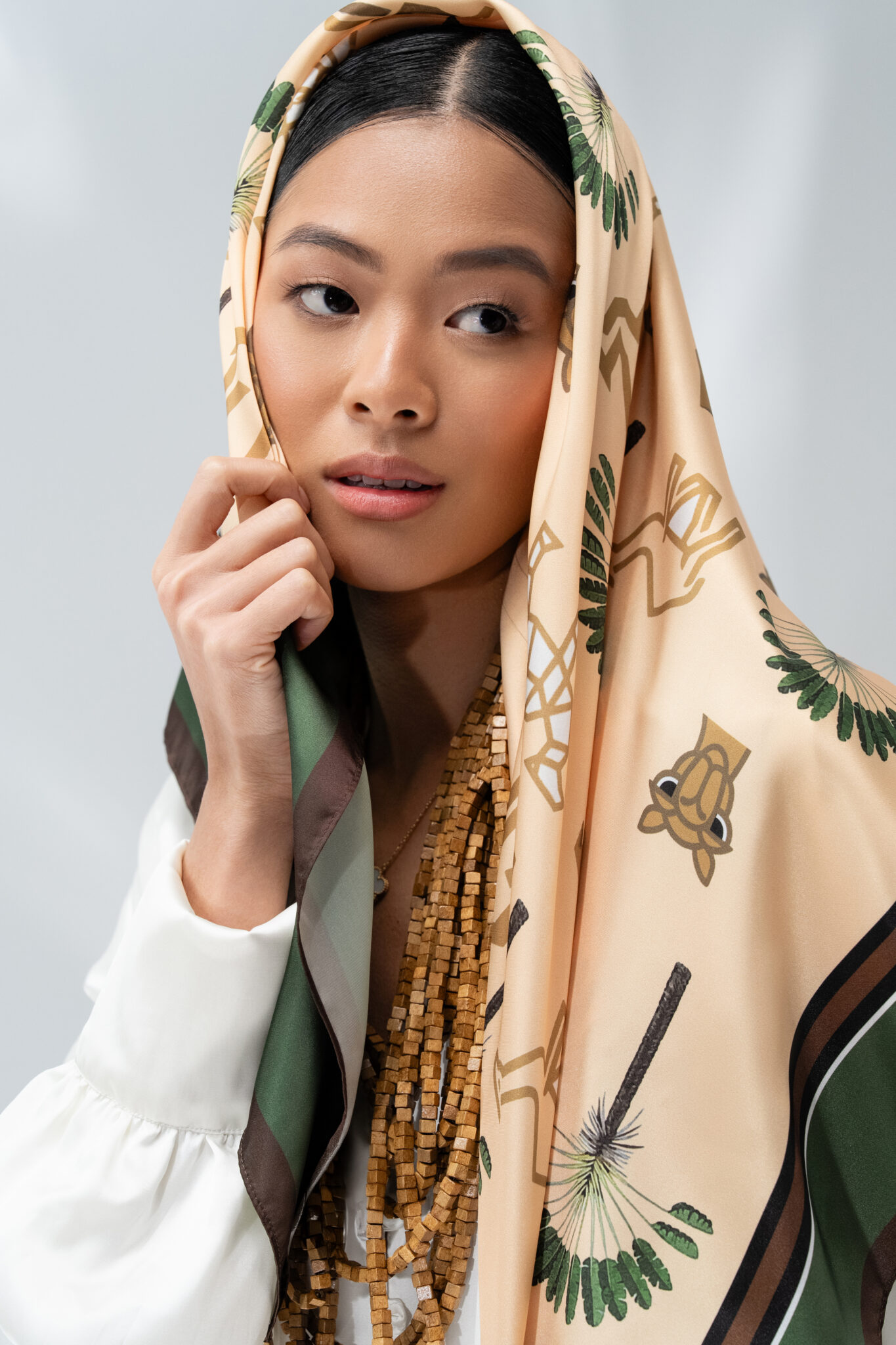


Nakhel & Aljamal
د.إ 185
In this artwork the palm (Nakhel in arabic) and the camel (Aljamal) are used to express the beauty and splendor of the desert and its most important elements.
Thus, the palm tree, being an important food item for Arabs, is also considered a symbol of beauty. While the camel, being a traditional means of transportation in the desert, is considered a symbol of endurance, ability, and power to bear hardships.
Traditional desert symbols in a new modern interpretation will for sure add a touch of the Arabian authenticity to your everyday stylish outfits.
| SKU: | 0037 |
| Category: | Scarves |

| Share on: |
Related Products


Arabica
د.إ 185This scarf is a real collection of symbols associated with the Arabian world. Here there are both majestic architecture of the modern world, plant and under water motifs of the fine arts as well as a traditional concept of an Arabian woman’s beauty. Even the main color of the scarf leaves full scope for imagination: some will see sands of the Arabian desert in it, others will associate it with the traditional Arabic coffee, symbol of hospitality and generosity of all Arabians.
By Bakhmullaeva Luiza @louisa.bak


Atlantis
د.إ 185The building of the Atlantis Hotel is one of the easily recognizable symbolic buildings of Dubai. The designer took its contours as the basis for the scarf. Against the magnificent architecture of Atlantis, mysterious and alluring underwater world is depicted. This is the world that you want to dive into, that you want to discover and that Atlantis itself invites you to with its well-known Aquarium.
By Bakhmullaeva Luiza @louisa.bak


Hamsa
د.إ 185The hamsa is a palm-shaped symbol historically used by Muslims in Arab countries as an amulet to ward off evil forces. It is an Arabic word that means “five”, “the five fingers of the hand” symbolizing the Hand of Fatima, the daughter of Muhammad.
Original design by the LAMIS Arabian Treasures brand


Shemagh
د.إ 185This artwork is inspired by the The Shemagh or Ghutra, the traditional Middle Eastern men’s headdress. Checkered red and white patterns are used for the ghutras in the Middle East countries. Ghutras were an adaptation that helped men survive the hot desert climate protecting them against the sun and the dust.
By Hend Almurid @hendsight
Hend Almurid is a self-taught artist from Dubai. She found her passion in drawing in childhood. She found her inspiration in cartoons that she used to watch when she was young. Hend has created her own distinctive style, easily identified among other designs.


Al Burqua’a
د.إ 185This artwork was inspired by Al Burqua’a. Handcrafted of delicate fabric and worn over the face, this accessory is traditionally worn by married women. It provides modesty to women.
By Hend Almurid @hendsight
Hend Almurid is a self-taught artist from Dubai. She found her passion in drawing in childhood. She found her inspiration in cartoons that she used to watch when she was young. Hend has created her own distinctive style, easily identified among other designs.


Horses Passion
د.إ 185The horse is one of those animals that Arabs are really passionate about. The horse symbolizes intelligence, wisdom, nobility, light, dynamic strength, agility, speed of thought, and time run. This is a typical symbol of fertility, courage and strong power in the culture of the Persian Gulf.
By Bakhmullaeva Luiza @louisa.bakh


Peacocks
د.إ 185There is a clear admiration of peacocks in the Middle East. In the Islamic world, the peacock is strongly associated with Paradise. Islamic folklore glorifies this bird as the one who started the Islamic tradition of prayer.
Original design by the LAMIS Arabian Treasures brand


Najm Alsharq
د.إ 185Najm Alsharq from Arabic means A Star Of The East. The central star, intricate flowers, and gold Islamic geometry embellishments of the scarf repeat adornments of the walls of this real Star of the East – the world-known Sheikh Zayed Mosque in Abu-Dhabi.
This artwork brings together spiritual, physical, and symbolic presentation of this most important sightseeing in the Gulf Region.
